
Have you ever wondered why some diseases, like oral cancer, seem to linger in the shadows, defying our best efforts to understand and combat them?
Oral cancer is a prime example, affecting lives and leaving behind a trail of questions. With an average survival rate of just five years post-diagnosis, the need for answers has never been more pressing.
But here’s the twist: the answers might be right under our noses or rather, in our mouths.
Imagine if a simple, non-invasive test could reveal critical insights about oral cancer, guiding us towards more effective treatments and, perhaps, even prevention.
Well, that’s where saliva comes into the picture!

Picture credit: Wikipedia
Saliva, often dismissed as merely a means of moistening our mouths, is emerging as a potent ally in our battle against oral cancer. It’s like a treasure chest of information waiting to be unlocked. And the key?
Non-coding RNAs tiny molecules within saliva that play a significant role in the development and progression of oral cancer.
In this journey through the world of saliva diagnostics and RNA, we’ll demystify the complexities surrounding oral cancer.
We’ll explore how this humble bodily fluid could revolutionize our understanding of the disease and, ultimately, transform the way we diagnose, predict, and treat oral cancer.
So, are you ready to uncover the secrets hidden in your spit and take a step closer to conquering oral cancer? Let’s dive in!
Oral Cancer is a serious problem
Oral cancer can severely disrupt a person’s life, and despite advances in research and technology, the average life expectancy after diagnosis is only about 5 years.
Changing Trends
More young people and women without tobacco habits are getting oral cancer. Non-habit-related factors are becoming more important in its development.
Molecular Study Needed
To understand oral cancer better, we need to study it at the molecular level.
One way to do this is by examining saliva, which is easy to collect and contains many molecules related to oral cancer
The RNA Story
Picture Credit: Medizyy
Background:
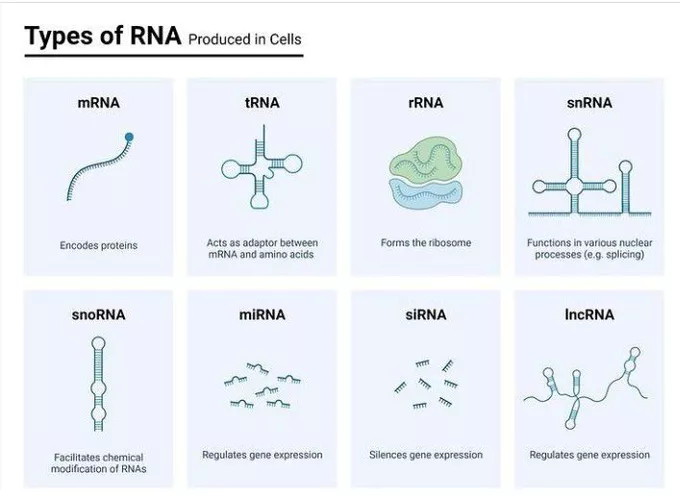
In the human genome, about 98% of the 3 billion base pairs of DNA are non-coding RNAs, which means they don’t make proteins. These non-coding RNAs come in various types, including:
- Housekeeping RNAs: These are essential for basic cellular functions.
- Regulatory RNAs: This category includes various types of non-coding RNAs with specialized roles. Some important types of regulatory RNAs within this category include:
MicroRNA (miRNA): These are tiny RNA molecules that play a role in controlling gene expression and are increasingly recognized for their involvement in oral cancer development and progression.
Long Non-Coding RNA (lncRNA): These are longer RNA molecules that do not code for proteins but have diverse roles in gene regulation. They have emerged as key players in oral cancer biology and diagnostics.
Circular RNA: Circular RNAs are a unique class of non-coding RNAs with a circular structure. They are gaining attention for their potential as diagnostic and prognostic markers in oral cancer and other diseases.
Small Interfering RNA (siRNA): These are synthetic or naturally occurring small RNA molecules used to silence specific genes. They have therapeutic potential in treating various diseases, including oral cancer.
Piwi-Interacting RNA (piRNA): piRNAs are a group of small RNAs involved in maintaining genome stability, but their role in oral cancer is still under investigation.
Telomerase RNA: Telomerase is an enzyme that plays a role in maintaining the ends of chromosomes (telomeres). Telomerase RNA is part of this enzyme complex and has been studied in the context of cancer.
Small Nuclear RNA (snRNA) and Small Nucleolar RNA (snoRNA): These small RNA molecules are involved in various cellular processes, including splicing and modifying other RNAs.
Enhancer RNA: These RNAs are transcribed from enhancer regions of the genome and can influence gene expression. Their role in oral cancer and other diseases is an area of active research
Molecular Clues in Saliva
To unravel the mysteries of oral cancer, researchers are turning to saliva diagnostics, a non-invasive and rich source of molecular information.
The RNA molecules found in saliva come from various sources, including salivary ducts, gum pockets, gingival crevicular fluid, and cells shed from the mouth’s lining.
Initially, these non-coding RNAs were thought to be unimportant or “junk” in the genome. However, they are now recognized to play significant roles in both healthy and disease-related biological processes.
Researchers are particularly interested in three types of non-coding RNAs—miRNA, lncRNA, and circular RNA—because they seem to be involved in the development and progression of oral cancer. These RNAs have shown promise as diagnostic and prognostic markers.
Follow The Spit School for more information on saliva
The Salivary RNA Solution
In the quest for better oral cancer biomarkers, non-coding RNAs are emerging as promising candidates, overturning previous assumptions about their significance.
Continued exploration of microRNAs, long non-coding RNAs, and circular RNAs in saliva diagnostics promises a deeper understanding of oral cancer at the molecular level.
Saliva diagnostics, with a focus on RNA molecules, holds the key to improving the diagnosis and management of oral cancer, offering hope for better outcomes and enhanced survival rates.
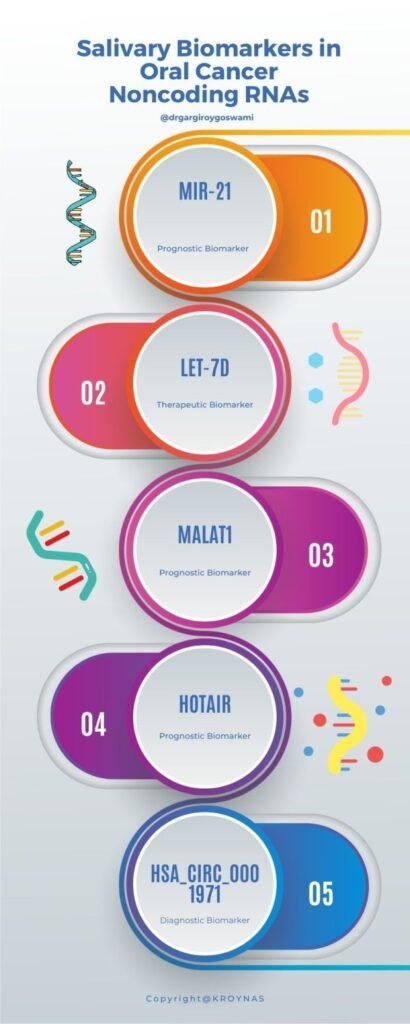
Salivary Non-coding RNA Biomarkers in Oral Cancer
What lies ahead on this path of discovery?
What was once dismissed as genetic “junk” has now emerged as the linchpin in our understanding of this formidable disease. From miRNA to lncRNA and circular RNA, these tiny molecules have rewritten the narrative of oral cancer, offering hope for earlier diagnosis, improved prognosis, and innovative therapies.
But this is just the beginning. As science continues to unveil the secrets hidden within our own spit, we must ponder:
How can we harness the power of non-coding RNAs in saliva to not only detect and predict oral cancer but also revolutionize its treatment?
The journey to conquer oral cancer has taken a promising turn, and the road ahead is full of opportunities waiting to be explored.
Will you join the quest to unlock these mysteries, reshape the landscape of oral cancer diagnosis and treatment, and ultimately improve the lives of those affected by this relentless adversary?
The future of oral cancer research lies in your curiosity, your innovation, and your dedication to making a difference. So, what will you bring to this transformative journey.
(Inspired from: https://doi.org/10.1016/j.ncrna.2023.05.001)
#dentalgenetics #salivatest #oralcancer
Learn all about Saliva! Explore our exclusive online course.
